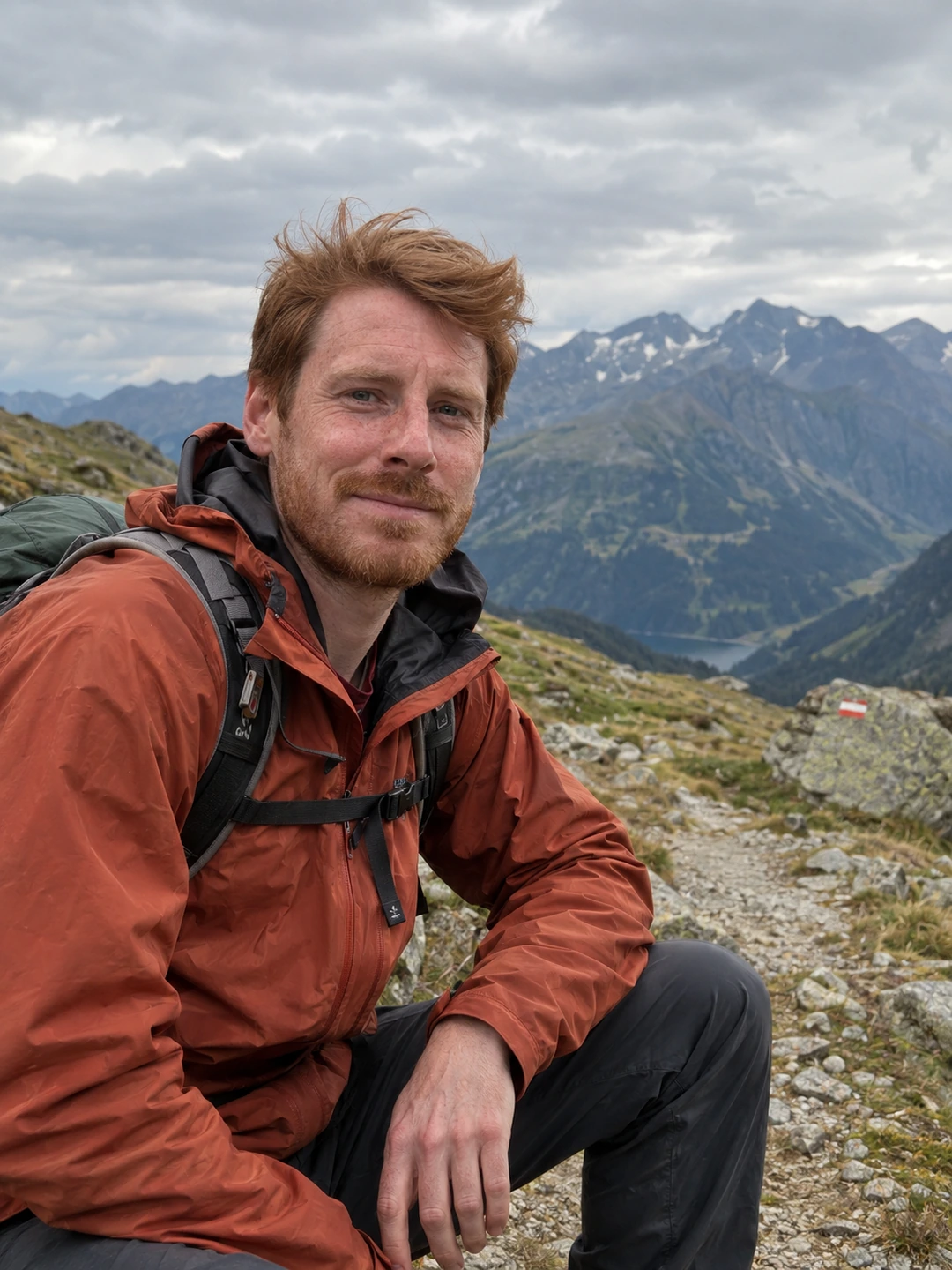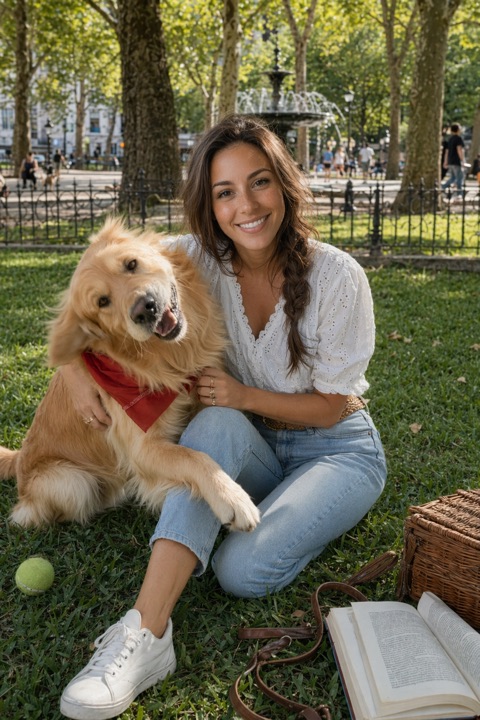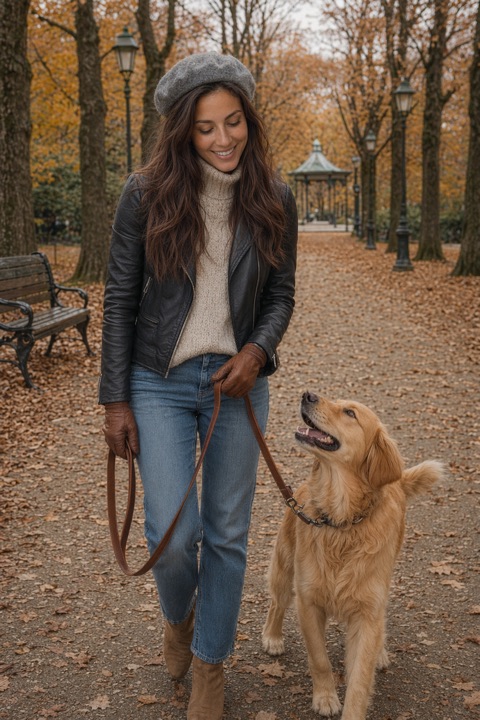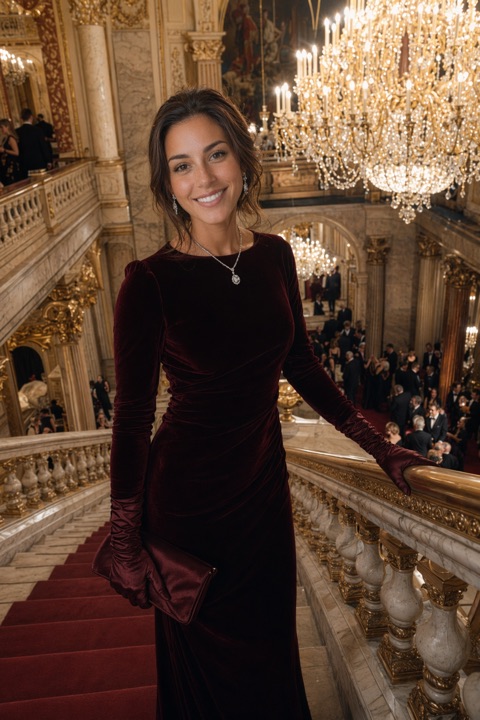
A profile picture has an unusually hard job. It has to be readable at 40 pixels wide, survive being cropped to a circle, and tell a stranger something true about you before they've read a single word. Most people solve it by picking whichever recent photo they happen to like, which is why most profile pictures are forgettable rather than bad.
The fixes are mechanical, not aesthetic. Get these six things right and almost any photo of you becomes a usable profile picture.
The six things that decide it
- Your face fills the frame. Head and shoulders, face taking up roughly 60% of the height. The single most common failure is a nice photo of a person standing in front of something, shrunk until the person is unidentifiable.
- Soft light from the front. A window, open shade, or the hour before sunset. Overhead light drops shadows into your eye sockets; direct midday sun makes you squint and blows out your forehead.
- Eyes visible and looking at the lens. No sunglasses, no hat brim shadow, no looking wistfully off to the side. Eye contact is what makes a thumbnail feel like a person rather than a stock photo.
- A background that isn't doing anything. A wall, a hedge, a blurred street. If a viewer has to work out what they're looking at, that's attention taken from your face.
- A real expression. Not a grin held for four seconds. The reliable trick is to be mid-laugh or mid-exhale — the frame just after you stop trying is usually the one.
- Shot from eye level or slightly above. Below eye level exaggerates your jaw and nostrils. Slightly above is the most universally flattering angle there is.
Test it before you commit
Shrink your candidate to the size of a postage stamp and look at it. If you can't tell it's you, it's not a profile picture — it's a photo you like. The free Dating Photo Analyzer runs the same check on a whole set at once.
Profile picture ideas that actually work
If you're stuck on what to shoot rather than how, these are the setups that reliably produce a usable frame with nothing but a phone and ten minutes.
- Window portrait. Stand facing a window, an arm's length back, phone at eye level on a 10-second timer. The cheapest good light in existence.
- Open shade outdoors. Under a tree, in a doorway, on the shaded side of a building. Even light, no squinting, natural background blur.
- Golden hour walk. The 40 minutes before sunset. Turn so the sun is behind you at 45 degrees and it rims your hair instead of flattening your face.
- Coffee shop table. Big windows, warm tones, and a setting that gives the photo a reason to exist.
- Doing the thing you actually do. Cooking, climbing, at the piano, on a bike. Occupied hands solve the awkwardness problem, and the photo carries information a plain portrait can't.
- Plain wall, one step out. A textured or coloured wall, you standing a metre in front of it so it goes softly out of focus. Reads as deliberate for very little effort.
Where it changes by platform
The fundamentals hold everywhere. Three things shift.
| Platform | What changes |
|---|---|
| Dating apps | You get a set, not one photo. The lead shot carries the match; the rest add variety and proof. See the complete guide. |
| LinkedIn and work | Tighter crop, neutral background, business-casual at minimum. Warmth still beats severity — see the LinkedIn photo guide. |
| Slack, WhatsApp, forums | Rendered tiny and circular. Crop closer than feels comfortable and check the circle doesn't clip your chin. |
The mistakes worth naming
- A group photo. Nobody should have to work out which one is you.
- A photo more than two years old. It sets up a mismatch you'll have to explain later.
- Heavy filters or beauty smoothing. Reads as hiding something, and it's obvious at full size.
- A wide shot you cropped in on. Phone crops from a distant photo go soft and grainy at exactly the moment detail matters.
- Your sunglasses, your dog, or your car as the subject. All fine as a second photo. None of them are you.
If none of your existing photos clear the bar, the honest options are a ten-minute shoot with a window and a timer — how to take good photos of yourself covers the mechanics — or generating a set from a handful of selfies, which is what we built PhotoDating.ai to do.