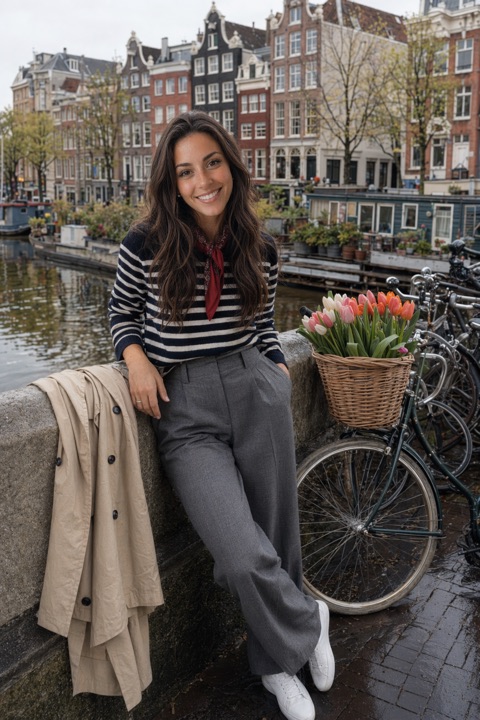
Yes — with teeth, in your opener. It's one of the few things in dating photography where the evidence points consistently in one direction. But 'smile' is doing a lot of work in that sentence, because a bad smile underperforms a neutral expression.
Why smiling wins
A smile answers the question people are actually asking, which isn't 'are you attractive' but 'would this be pleasant'. Warmth is read faster than bone structure, and it's read from the eyes as much as the mouth.
The difference between the two smiles
| Genuine | Posed | |
|---|---|---|
| Eyes | Narrow slightly, creases at the corners | Wide and unchanged |
| Timing | Appears and fades | Held |
| Reads as | Enjoying the moment | Waiting for the photo to end |
The eyes are the whole difference. A mouth-only smile is the thing people mean when they say a photo looks fake — and everyone can spot it, even if they can't name it.
How to get the real one
- Shoot in bursts. Hold the shutter and take thirty. The genuine ones happen between the posed ones.
- Talk during it. Have whoever's shooting ask you something. Photos taken mid-answer beat photos taken on 'three, two, one'.
- Laugh, then let it fall. The frame a second after a laugh is usually the best one on the roll.
- Don't hold it. A smile held past about two seconds visibly stiffens.
Where the serious photo goes
One non-smiling photo in a set adds range and can look great. It just shouldn't be first — the opener's job is warmth, and a serious expression makes people work out your mood instead of your face.
More on getting a natural expression in how to look good in photos.