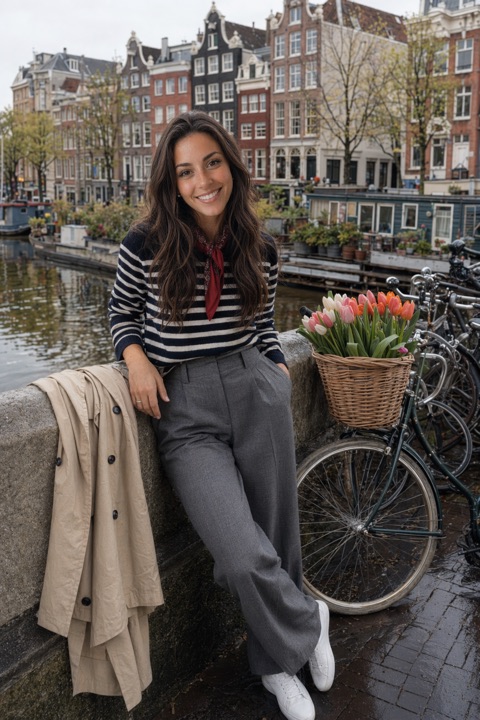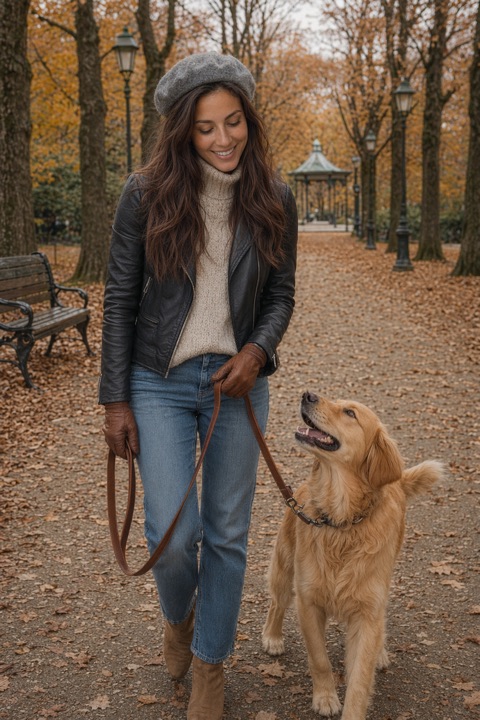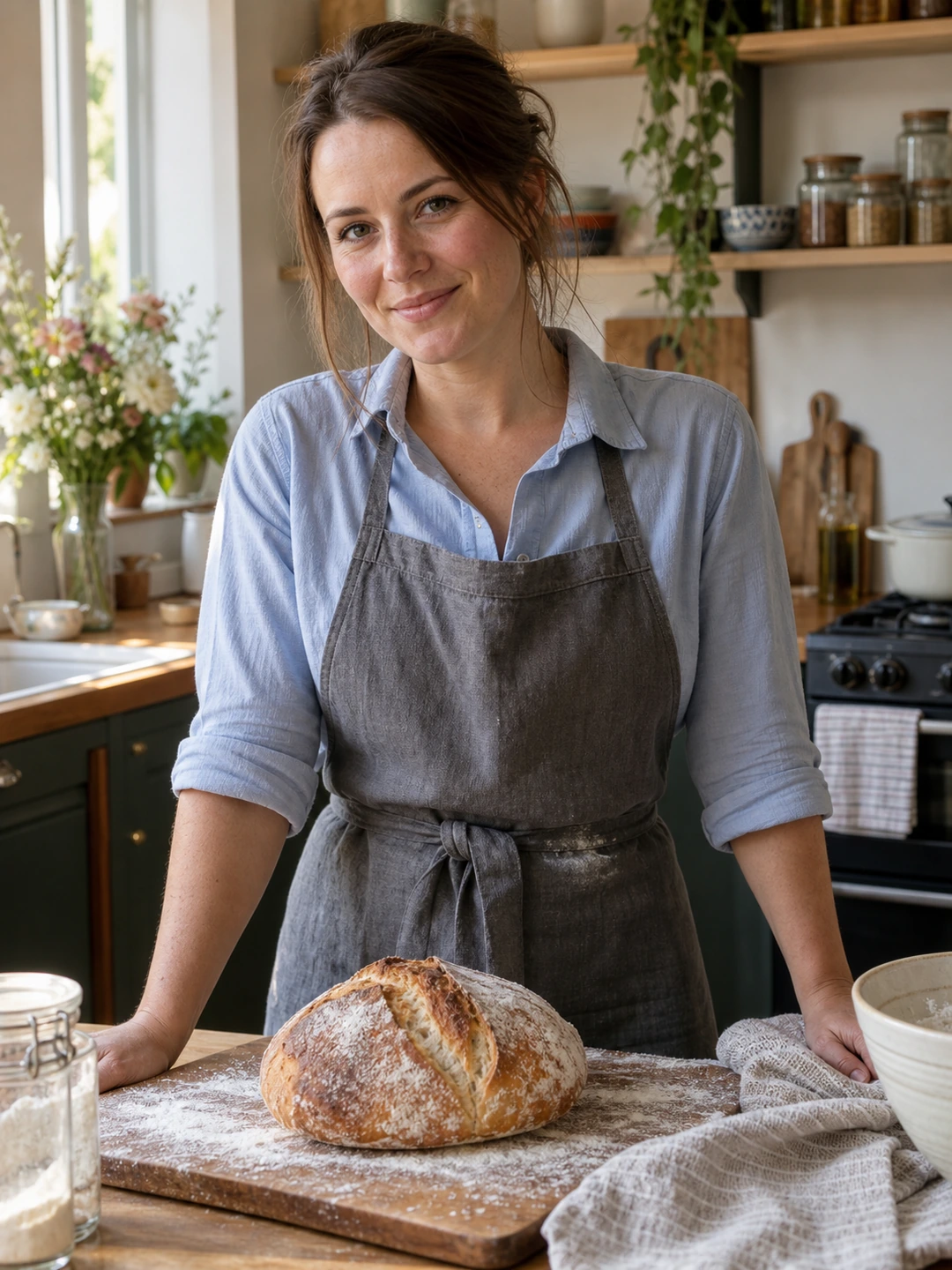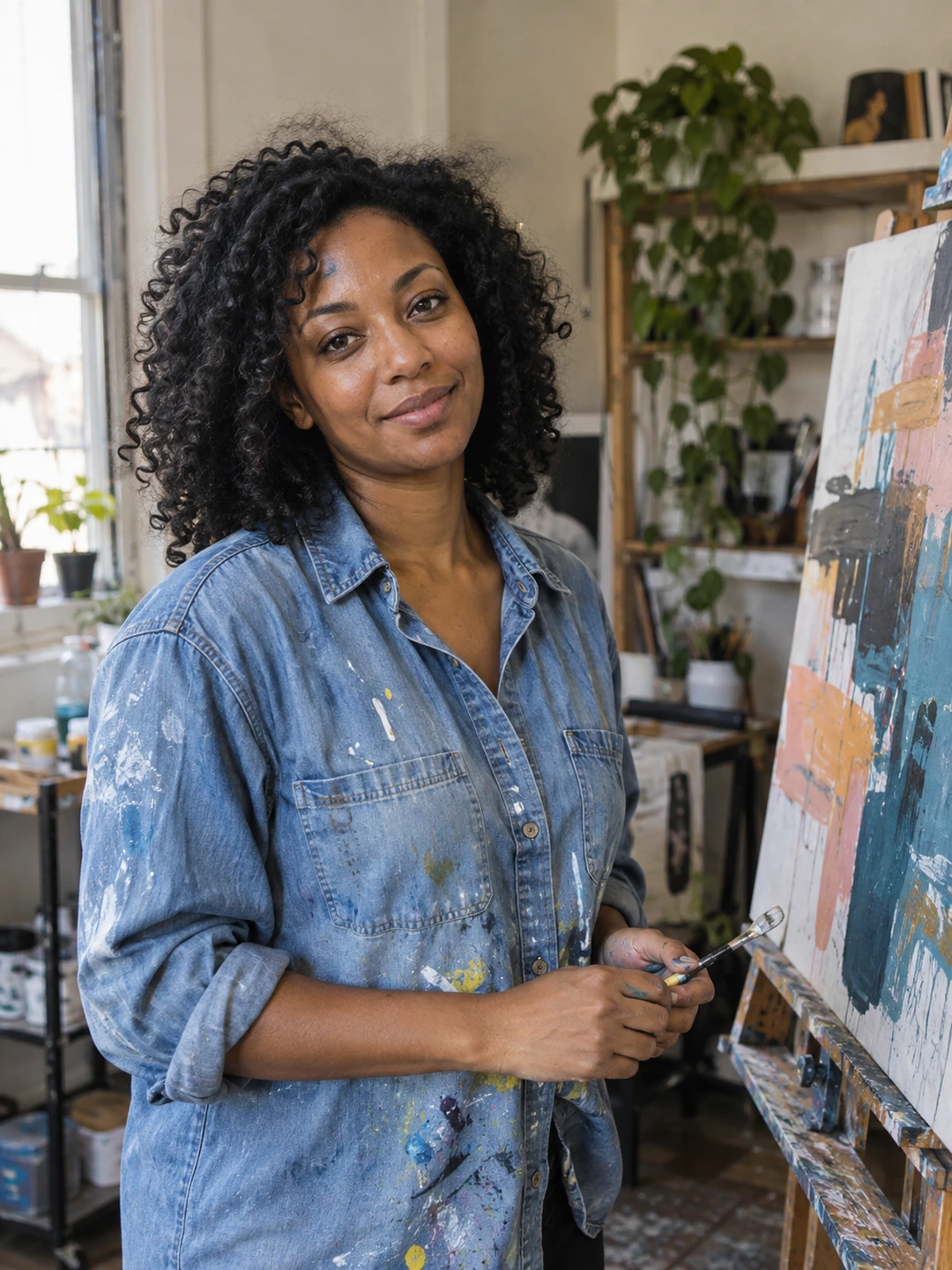
You can plan a dating photo session and still get a relaxed, natural expression. A genuinely candid photo captures an unplanned moment; a candid-style portrait is arranged to look less formal. Either can be useful if it shows you accurately. You do not need to pretend a friend caught you unaware. The practical aim is a photo where your face is clear and the activity belongs to your actual life.
Give the photo one job
Before you ask anyone to take pictures, decide what is missing from your profile. Perhaps every image is a close-up and you want to show an everyday setting. Perhaps your photos are clear but formal, and you want a more relaxed expression. The plan below is for that supporting photo. It does not replace a recognisable opener or require you to rebuild the entire set. For individual body-position adjustments, use the separate dating photo posing guide.
- Choose an ordinary activity. Walking to a café, making something you often cook or browsing books you actually enjoy gives you something to do. You should be able to talk about the scene without explaining that the props were borrowed solely for the photograph.
- Agree on the session. Tell your friend you want a few profile photos and agree when you will stop. You can be aware of the camera without staring into it constantly. Do not ask someone to photograph you secretly or include bystanders as dating-profile scenery.
- Keep the setup manageable. One place, one outfit and one activity are enough for a first attempt. A complicated itinerary can make you spend the session managing locations rather than settling into the moment you wanted to capture.
Try this short shooting sequence
Treat this as a roughly fifteen-minute exercise, not a target number of usable pictures. Canon’s portrait guidance recommends helping your subject feel comfortable and using conversation to encourage natural expression. You can apply that principle with a phone and someone you know. Ask them to keep talking between frames instead of repeating an instruction to smile. Pause if either of you starts feeling that the session has become work.
- 1First, take a simple reference portrait. Stand or sit comfortably and look towards the camera for a few frames. Check whether your face is clear and whether the background distracts. This gives you a fallback and helps you spot basic problems before adding movement.
- 2Then start the real activity. Walk a short stretch at an ordinary pace, turn a page or prepare the next part of your recipe. Ask your friend to capture a few moments while you do it. Choose a safe, stationary setup where needed; a phone should not distract you near traffic or hot cooking equipment.
- 3Pause for conversation. Stop the activity and talk about something specific, such as what you are reading or where you want to walk next. Let your friend photograph the pause as well as the action. A still moment may give you a clearer face than the most energetic frame.
- 4Change the framing once. Ask for a closer view that shows your expression and a wider view that explains the activity. You do not need multiple near-identical photos for the finished profile. The wider option is useful only if someone can still identify you.
- 5Review a few frames before leaving. Look for a clear face, comfortable expression and an intelligible setting. If every face is soft or turned away, take a few quieter frames. Then finish the outing; you do not have to keep shooting until you have documented every possible angle.
Choose a scene that does not need explaining
| Scene | A natural action | What to avoid |
|---|---|---|
| Your usual neighbourhood walk | Pause to talk after a short stretch. | A distant figure where the location is clearer than your face. |
| A café you enjoy | Talk with your friend before lifting the cup. | A cup covering your expression in every frame. |
| Something you make at home | Work on one familiar step, then look up during a pause. | Staging an elaborate hobby you do not actually practise. |
| A bookshop or library, where photos are permitted | Browse a section you would visit anyway. | Blocking other visitors or showing someone else’s face without permission. |
| Time with your own pet | Sit together during a calm moment. | Forcing the animal into a pose or presenting a borrowed pet as yours. |
Select one moment, not the whole session
Make a shortlist before editing. Remove shots where your face is hidden, the moment looks uncomfortable or the setting requires an explanation that your profile cannot provide. Then compare the remaining pictures at roughly the size they will appear in the app. A technically imperfect image can still be useful if you are clear and recognisable; a dramatic scene is less useful if you are a tiny figure. Pick the frame that adds information the other photos do not already show, rather than uploading several moments from the same sequence.
Generated portraits serve a different purpose
PhotoDating.ai generates portrait options from your own selfies. Review them for accurate likeness, and keep real photographs for evidence of your hobbies, travels and everyday moments. An AI-generated café or hiking scene is not a candid record of an outing.
If you are taking pictures alone, set your phone securely and use its timer for an arranged portrait; the self-photo guide covers that setup. Do not try to manufacture the appearance of a secret photographer. Add your chosen supporting shot to a clear opener and other useful views, using the dating profile photos guide to check the balance. A natural-looking photo cannot guarantee a match, but it can show a part of your life that a row of similar selfies leaves out.